
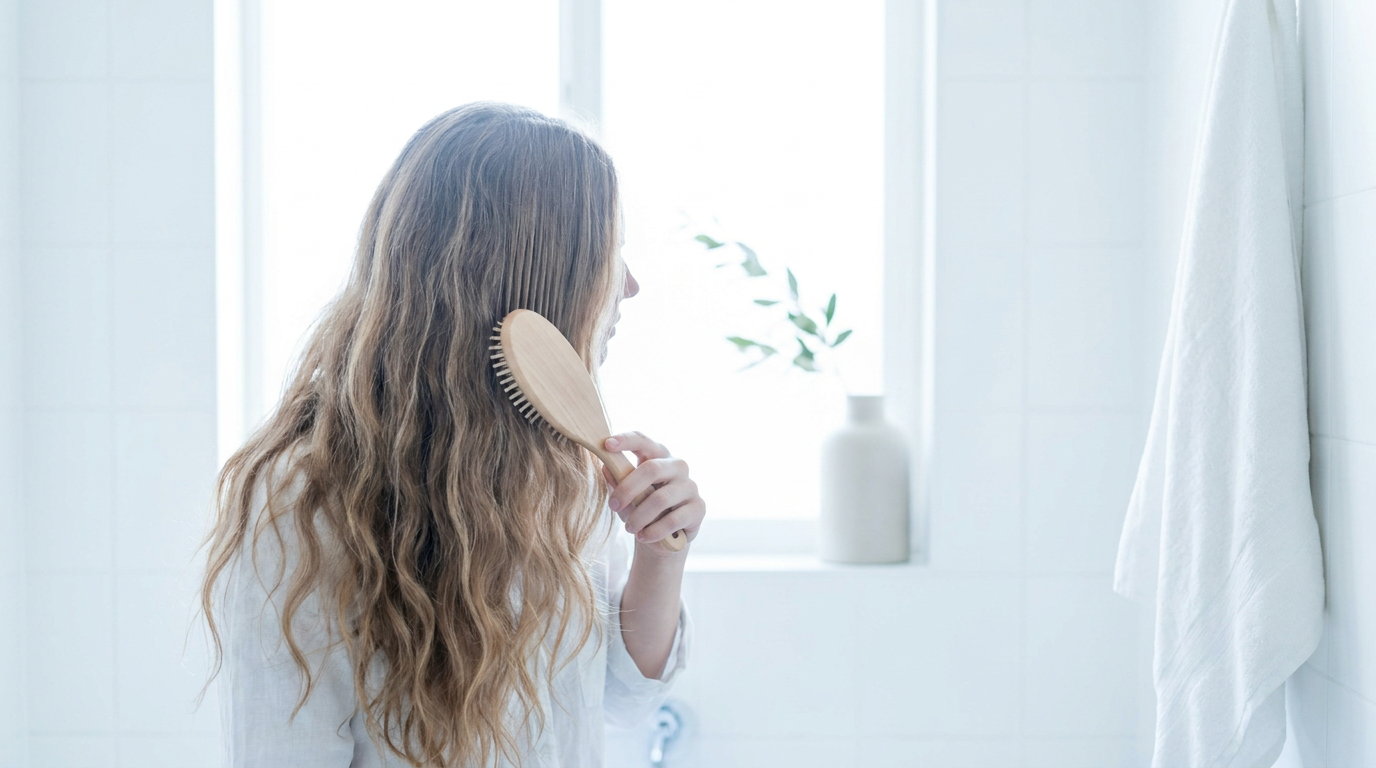
Maybe you noticed it in the shower drain. Or in your brush. Or in a photo where your part looked wider than you remembered. Hair thinning has a way of sneaking up on you, and then suddenly it is all you can see.
First, take a breath. This is one of the most common things people deal with. It happens to men and women, and it does not mean anything is wrong with you. Losing 50 to 100 hairs a day is completely normal.
The good news is that hair thinning is one of the areas where real, approved treatments exist. Not miracles, but honest options that work for many people. Let’s walk through it together.
What is hair thinning?
Every hair on your head follows a cycle. It grows for a few years, rests for a bit, falls out, and a new hair grows in its place. Thinning happens when that cycle gets out of balance. Either more hairs fall out than usual, or the new hairs grow back finer and weaker than before.
The most common type is pattern hair loss (the kind that runs in families). Doctors call it androgenetic alopecia, which is just a medical name for hereditary thinning driven by hormones (the body’s chemical messengers). In men it often shows up as a receding hairline or a thin spot on the crown. In women it usually shows up as a wider part and less fullness overall.
Why it happens
There is rarely just one cause. Here are the big ones:
- Genes and hormones. A hormone called DHT (a form of testosterone, the main male hormone) slowly shrinks hair roots in people who inherit sensitivity to it. Smaller roots make thinner, shorter hairs.
- Stress shedding. A big shock to the body, like illness, surgery, childbirth, or intense stress, can push lots of hairs into the falling-out phase at once. Doctors call this telogen effluvium (a temporary heavy shed). It usually shows up two to three months after the stressful event.
- Thyroid problems. The thyroid (a small gland in your neck that controls your body’s energy) can cause thinning when it runs too fast or too slow.
- Low iron or poor nutrition. Hair is not essential for survival, so when your body runs low on building blocks, hair is one of the first things it stops spending on.
- Menopause (when monthly periods stop for good). Falling estrogen (a key female hormone) shifts the balance toward thinning for many women.
- Tight hairstyles and harsh treatments. Constant pulling from tight braids or ponytails can damage hair roots over time.
- Some medicines. Certain blood pressure pills, pills for depression, and other medicines list hair thinning as a side effect.
What really helps
Here is the honest picture. Nothing regrows a full head of hair overnight. But the approved treatments below can slow the loss, keep what you have, and regrow some hair for many people. Starting early matters, because it is easier to keep hair than to bring it back.
- Minoxidil. This is an over-the-counter liquid or foam you apply to the scalp. It is approved for regrowth in both men and women. It takes three to six months to show results, and you have to keep using it, because the benefit fades if you stop. A brief extra shed in the first weeks is normal and usually a sign it is working.
- Finasteride. This is a prescription pill for men. It blocks DHT, the hormone that shrinks hair roots. It works well for many men, but it needs a doctor’s visit first, because there are possible side effects worth discussing.
- Seeing a dermatologist. A dermatologist (a skin-and-hair doctor) can look at your scalp up close, figure out which type of thinning you have, and order simple blood tests for iron and thyroid. This matters, because a stress shed and pattern loss look similar but are handled differently. A stress shed usually grows back on its own once the cause passes.
- Fixing the root cause. If low iron, thyroid trouble, or a medicine is behind your thinning, treating that problem often brings the hair back. This is why a doctor’s checkup is worth it before you spend money on products.
- Gentle habits. Looser hairstyles, less heat styling, and a balanced diet with enough protein will not regrow hair by themselves, but they stop you from making things worse.
Peptides being studied in this area
Peptides (small chains of protein building blocks) come up a lot in hair conversations online. Here is the honest rundown.
GHK-Cu (copper peptide). This is the peptide you will see most often in hair serums and shampoos. Worth knowing: GHK-Cu is actually best studied for skin, not hair. For hair, it is a cosmetic ingredient, meaning it is used in rinse-off and leave-in products to support the look and feel of the hair and scalp. The evidence there is supportive but limited, mostly small studies. It is not an approved treatment for hair loss, and it is not a replacement for minoxidil or a doctor’s care. If you enjoy a copper peptide serum as an extra, that is a reasonable cosmetic choice. Just keep your expectations modest.
Collagen peptides. This is the everyday powder people stir into coffee. Collagen has reasonable evidence for skin hydration and joint comfort. For hair, the honest answer is that the evidence is thin. Hair is made of a protein called keratin, and collagen supplies some of the building blocks your body can use to make it. So collagen may support your overall protein intake, but no good study shows it regrows thinning hair. If your diet is already solid, it is unlikely to change what you see in the mirror.
If a website sells a peptide as a hair loss cure, be careful. The proven options are the ones above in the treatment section, and they are not exciting, but they are real.
When to see a doctor
Most thinning is slow and not dangerous. But make an appointment soon if you notice any of these:
- Hair coming out in sudden clumps or handfuls
- Smooth round bald patches, which can be a sign of an immune condition called alopecia areata (where the body attacks its own hair roots)
- An itchy, painful, red, or scaly scalp along with the thinning
- Thinning that comes with feeling tired, cold, or run down, which can point to thyroid or iron problems
- For women, thinning along with new facial hair or skipped periods, which can signal a hormone imbalance worth checking
Questions to ask your doctor
- What type of hair loss do I have, and is it likely to be temporary or ongoing?
- Should I get blood tests for iron, thyroid, or hormones?
- Is minoxidil a good fit for me, and how long should I try it before judging?
- Could any of my current medicines be causing this?
- At what point should I see a dermatologist or consider prescription options?
Hair thinning is stressful, but you have more good options here than for almost any other concern on this site. Start with a checkup, be patient with treatments, and give anything you try a few months to work. If you want the bigger picture on keeping your skin and hair healthy as you age, our healthy aging guide is a friendly place to continue. Not sure where to start? Take the 60-second quiz and we will point you in the right direction.



Comments