

You searched Wegovy® vs Ozempic® hoping for a simple answer. Instead you found two brand names and a wall of noise. That is a frustrating place to start.
Maybe your doctor mentioned one brand. A coworker swears by the other. The ads make them sound like rivals, so you feel stuck.
Here is the short version. Wegovy® and Ozempic® are the same medicine, semaglutide. They differ by the FDA-approved job, the dose, and how you get them.
KEY TAKEAWAYS
- Wegovy® and Ozempic® are the same medicine, semaglutide, made by Novo Nordisk.
- Wegovy® is FDA-approved for chronic weight management, plus lower heart risk.
- Ozempic® is FDA-approved for type 2 diabetes, plus lower heart risk.
- The brands differ by dose, approved job, and how you get access.
- Both need a prescription and carry the same boxed safety warning.
What readers want to figure out?
- You want to know if Wegovy® and Ozempic® are the same drug.
- You want to know which brand is for weight and which is for diabetes.
- You want the real trial numbers behind each brand.
- You want to understand why the doses and access differ.
- You want a plain answer on using Ozempic® for weight.
Are Wegovy® and Ozempic® the same drug?
Yes, at the core they are. Both Wegovy® and Ozempic® are semaglutide, made by Novo Nordisk. Semaglutide is the active molecule inside each pen.
Semaglutide is a GLP-1 receptor agonist. In plain terms, it copies a gut hormone called GLP-1. That hormone helps manage blood sugar and appetite.
So the ingredient is identical. What changes is the brand, and the brand carries real meaning. It tells you the tested dose and the FDA-approved use.
Wegovy® and Ozempic® are the same medicine, semaglutide. The brand name tells you the job the FDA approved it for.
Wegovy®: the semaglutide brand for weight
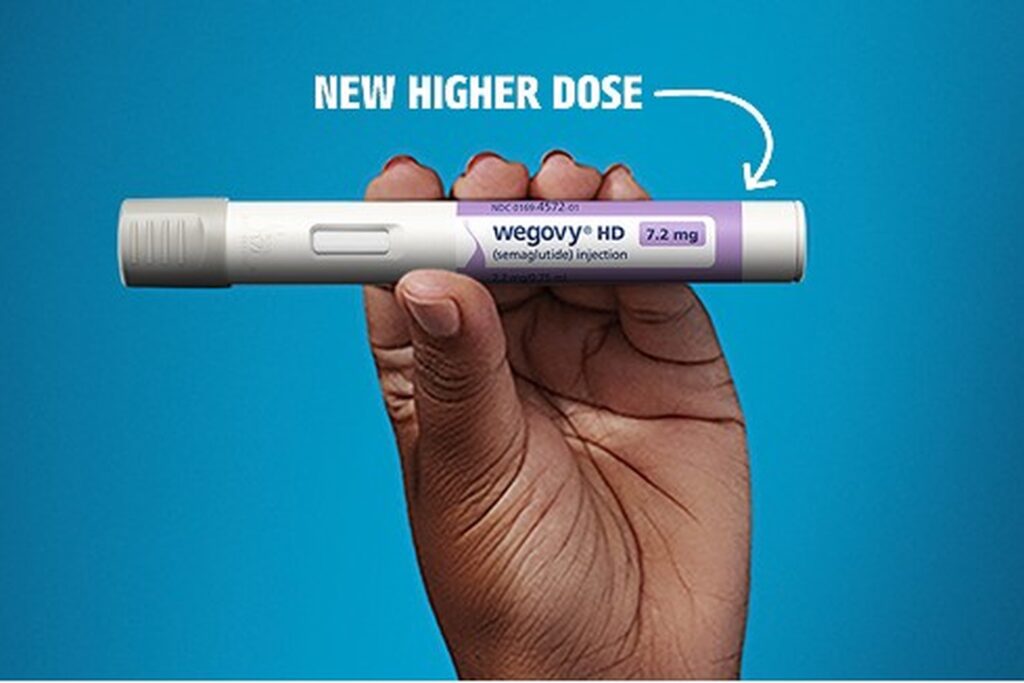
Wegovy® is semaglutide dosed up to 2.4 mg, given as a weekly shot. The FDA approved it for chronic weight management. It works alongside a reduced-calorie diet and more movement.
The headline study is STEP 1. Adults on Wegovy® lost about 14.9% of their body weight over 68 weeks. That trial enrolled 1,961 adults with overweight or obesity, without diabetes (Wilding 2021).
The gap over placebo was wide. People on the dummy shot lost about 2.4% in the same window. About 86% of the Wegovy® group lost at least 5% of their weight.
Wegovy® later earned a heart approval. In the SELECT trial, major heart events hit 6.5% on Wegovy® versus 8.0% on placebo. That is about 20% lower risk (hazard ratio 0.80).
SELECT was large. It followed 17,604 adults with heart disease and extra weight, without diabetes (Lincoff 2023). The FDA then added heart-risk reduction to the Wegovy® label.
Ozempic®: the semaglutide brand for type 2 diabetes
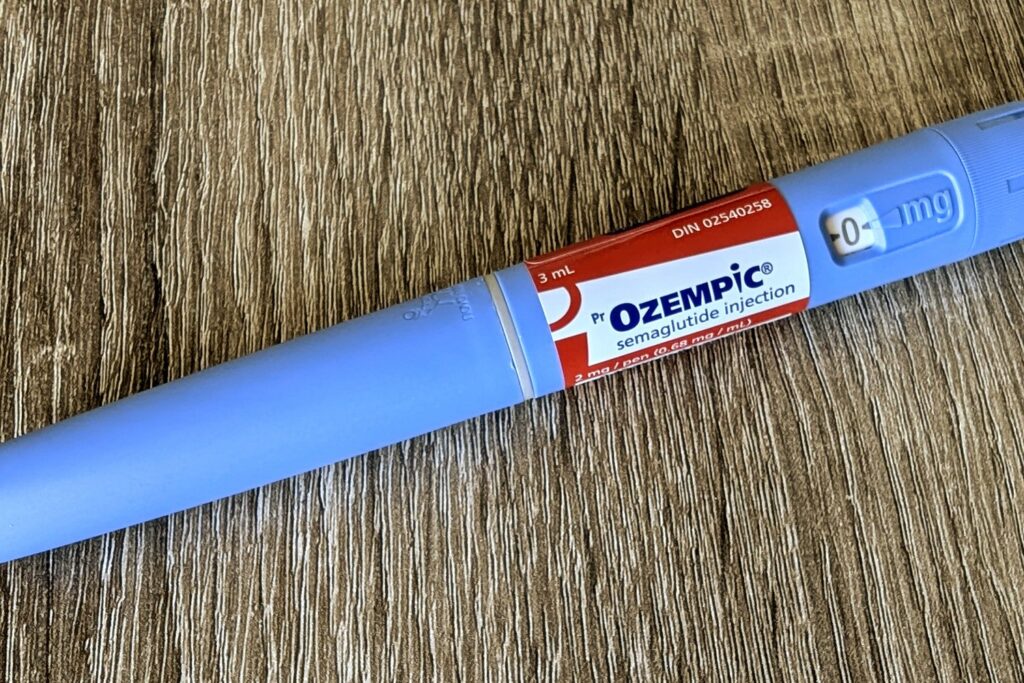
Ozempic® is semaglutide given as a weekly shot for type 2 diabetes. The FDA approved it to improve blood sugar in adults with the condition. Doses range from 0.25 mg up to 2 mg each week.
Here is the point that trips people up. Ozempic® is not FDA-approved for weight loss. Many people do lose weight on it, but weight is the job the FDA gave to Wegovy®.
The main Ozempic® trial program is called SUSTAIN. In SUSTAIN 6, the 1 mg dose lowered A1c by about 1.4%, versus 0.4% on placebo (Marso 2016). A1c is a common blood-sugar score.
That trial was built around the heart. It enrolled 3,297 adults with type 2 diabetes and high heart risk. Major heart events hit 6.6% on Ozempic® and 8.9% on placebo.
That result led to a second approval. The FDA approved Ozempic® to lower the risk of major heart events. This applies to adults with type 2 diabetes and known heart disease.
Ozempic® is not FDA-approved for weight loss. That job belongs to Wegovy®, and the STEP trials were run for it.
How Wegovy® and Ozempic® compare?
The easiest way to keep them straight is by job and by trial. Below is a side-by-side view of the two semaglutide brands. Every number ties back to a named study.
Read the table by your goal first. If weight is your goal, look at Wegovy®. If blood sugar is your goal, look at Ozempic®.
| What to compare | Wegovy® | Ozempic® |
|---|---|---|
| FDA-approved job | Chronic weight management, plus lower heart risk | Blood sugar in type 2 diabetes, plus lower heart risk |
| Active medicine | Semaglutide (Novo Nordisk) | Semaglutide (Novo Nordisk) |
| Form and schedule | Weekly shot | Weekly shot |
| Dose range | 0.25 mg up to 2.4 mg weekly | 0.25 mg up to 2 mg weekly |
| Key trial evidence | STEP 1: about 14.9% weight loss, 68 weeks (N=1,961) | SUSTAIN 6: A1c down about 1.4%, heart events 6.6% vs 8.9% (N=3,297) |
| Who it is for | Adults managing weight, per the FDA label | Adults with type 2 diabetes, per the FDA label |
Why the doses and max strength differ?
The two brands do not stop at the same dose. Wegovy® climbs to 2.4 mg each week. Ozempic® tops out at 2 mg each week.
That gap is not random. Each dose was tested for its own job. The weight trials used the higher Wegovy® dose, and the diabetes trials used the Ozempic® range.
Both brands start low and step up slowly. This slow build is meant to limit stomach side effects. Your clinician sets the pace based on how you feel.
| Brand | Starting dose | Usual top dose | How it steps up |
|---|---|---|---|
| Wegovy® | 0.25 mg weekly | 2.4 mg weekly | Shot, raised about every 4 weeks |
| Ozempic® | 0.25 mg weekly | 2 mg weekly | Shot, raised after at least 4 weeks |
Can you use Ozempic® for weight loss?
This question comes up a lot, so let me answer it plainly. Some clinicians do prescribe Ozempic® off-label for weight. Off-label means outside the FDA-approved use.
Here is the honest context. The FDA weight approval belongs to Wegovy®, not Ozempic®. The STEP weight-loss trials were run with the Wegovy® product.
I am not telling you to seek an off-label route. That is a decision for you and a licensed clinician. I only want you to know the two labels are different.
Safety: what both labels warn about?
Both brands share the same core safety profile. Each label carries a boxed warning about thyroid C-cell tumors. This effect was seen in rodents, and the risk in people is not known.
Because of that warning, both share one firm rule. Do not use them if you or a close family member had medullary thyroid carcinoma. The same holds for a rare condition called MEN 2.
The most common side effects are stomach-related. Nausea is the one people report most. Diarrhea, vomiting, and constipation are also common, per the FDA labels.
Same molecule does not mean same plan. Your goal, your health history, and access decide which brand fits you.
What about compounded semaglutide?
You may see ads for compounded semaglutide at a lower cost. This is not the same as the branded products. It is compounded semaglutide (not FDA-approved; not a generic of Wegovy® or Ozempic®).
That difference matters more than it looks. The trial results above come from the branded products. Those numbers apply only to the FDA-approved branded products and do not transfer to compounded preparations.
Compounded versions can vary in strength and purity. They have not passed the same FDA review. If you are weighing one, ask a licensed clinician detailed questions first.
Access and insurance: how getting each differs?
This is where the two brands often split in real life. Access can depend on your reason for the prescription. Coverage rules differ for diabetes and for weight.
Ozempic® is tied to type 2 diabetes, a use many plans recognize. Wegovy® is tied to weight, which some plans cover and others limit. Rules vary widely by plan and by state.
If insurance is a wall, cash-pay and telehealth options exist. Many people now start through licensed telehealth platforms. A clinician there reviews your history and decides if a GLP-1 fits.
I judge these platforms on how they operate, never on medical claims. Among the GLP-1 platforms I track, Refills is my top pick. It stands out on operational merit, like pricing transparency, titration support, and broad state coverage.
Our provider comparison ranks the options in one place. No insurance is required, and cash-pay options are available. Compare them on the same practical checklist, then choose what suits you.
What I would tell a friend?
If a friend asked me over coffee, I would keep it simple. Start with your goal, not the brand name. Your goal points you to the right label.
If weight is the reason, Wegovy® is the brand built for that job. If type 2 diabetes is the reason, Ozempic® is the brand built for that one. Same medicine, different job.
Then bring the trial names to a licensed clinician. Ask about dose, side effects, and access. That is how you turn a confusing search into a real plan.
The Bottom Line
Here is the simple map. Wegovy® and Ozempic® are both semaglutide from Novo Nordisk. The brand name tells you the dose range and the FDA-approved job.
Wegovy® owns weight, plus a heart-risk approval. Ozempic® owns blood sugar in type 2 diabetes, plus a heart-risk approval. The trial numbers here apply only to these FDA-approved brands.
Start with your goal, then talk to a licensed clinician. Bring the trial names and questions from this page. That is how you turn confusion into a real plan.
FREQUENTLY ASKED QUESTIONS
Both are semaglutide, made by Novo Nordisk, so the active medicine is the same. They are not interchangeable, though. Each brand has its own dose range and its own FDA-approved job. Wegovy® handles chronic weight management. Ozempic® handles blood sugar in adults with type 2 diabetes. The brand name tells you the approved use.
Wegovy® is the semaglutide brand the FDA approved for chronic weight management. Ozempic® is the semaglutide brand the FDA approved for type 2 diabetes. Both also carry an approval to lower the risk of major heart events. Your goal and your diagnosis point you toward the right brand, with help from a clinician.
Some clinicians prescribe Ozempic® off-label for weight, which means outside its FDA-approved use. The FDA weight approval belongs to Wegovy®, and the STEP weight trials were run with Wegovy®. This is not a suggestion to seek an off-label route. It is a decision for you and a licensed clinician to make together.
They are the same medicine, semaglutide, so it is not about one being stronger. The brands were tested for different jobs in different trials. Wegovy® uses a higher top dose, 2.4 mg, and was studied for weight. Ozempic® tops out at 2 mg and was studied for blood sugar in type 2 diabetes.
They share the same core safety profile because they are the same medicine. Both labels carry a boxed warning about thyroid C-cell tumors seen in rodents. The most common side effects are stomach-related, like nausea, diarrhea, vomiting, and constipation. These often show up early and tend to ease as your body adjusts, per the FDA labels.
No. It is compounded semaglutide, which is not FDA-approved and not a generic of Wegovy® or Ozempic®. The trial results for the branded products do not transfer to compounded preparations. Compounded versions can vary in strength and purity. If you are considering one, ask a licensed clinician detailed questions first.
Not always, and the reason often ties to the approved use. Ozempic® is linked to type 2 diabetes, a use many plans recognize. Wegovy® is linked to weight, which some plans cover and others limit. Rules vary by plan and by state, so check your own coverage before you commit to a brand.
Yes. Wegovy® and Ozempic® both require a prescription from a licensed clinician. Many people now start through licensed telehealth platforms that review your health history first. The clinician decides whether a GLP-1 is appropriate for you. Coverage and availability can vary by state, so check what is offered where you live.
Go deeper
The best GLP-1 providers, compared
Now you know Wegovy® and Ozempic® are the same medicine. Next, see how the top telehealth providers stack up on access, support, and pricing transparency.
→ Read next: /compare/best-glp1-programs/
SOURCES
1. Wilding JPH, et al. Once-Weekly Semaglutide in Adults with Overweight or Obesity (STEP 1). N Engl J Med. 2021;384:989-1002. https://www.nejm.org/doi/full/10.1056/NEJMoa2032183
2. Lincoff AM, et al. Semaglutide and Cardiovascular Outcomes in Obesity without Diabetes (SELECT). N Engl J Med. 2023;389:2221-2232. https://www.nejm.org/doi/full/10.1056/NEJMoa2307563
3. Marso SP, et al. Semaglutide and Cardiovascular Outcomes in Patients with Type 2 Diabetes (SUSTAIN-6). N Engl J Med. 2016;375:1834-1844. https://www.nejm.org/doi/full/10.1056/NEJMoa1607141
4. US Food and Drug Administration. WEGOVY (semaglutide) Prescribing Information. 2026. https://www.accessdata.fda.gov/drugsatfda_docs/label/2026/215256s033lbl.pdf
5. US Food and Drug Administration. OZEMPIC (semaglutide) Prescribing Information. 2025. https://www.accessdata.fda.gov/drugsatfda_docs/label/2025/209637s035,209637s037lbl.pdf
Last updated: 2026-07-10 · Editorially reviewed by the Peptides.io team
Important notices & disclaimers
Editorial & medical: This guide is general education, not medical advice. Talk to a licensed clinician before starting, stopping, or changing any medication.
Affiliate disclosure: Peptides.io may earn a commission from links to providers — it never changes what you pay or how we rank them, and never influences our recommendations.
Compounded GLP-1 (FDA): Compounded semaglutide and tirzepatide are not FDA-approved and have not been evaluated by the FDA for safety, effectiveness, or quality. They are not generic versions of, or equivalent to, branded medications such as Ozempic®, Wegovy®, Mounjaro®, or Zepbound®. Clinical-trial results cited here apply only to those branded formulations — not to compounded preparations.
Top Weight Loss providers, vetted & ranked
We tracked pricing, compliance and real-user reviews. Here's where to actually start — each link goes straight to the provider.





More from Peptides.io
- GLP-1 Treatment Gap Index →Our analysis of where Medicaid access to GLP-1s falls shortest, by state
- Original research from Peptides.io →Data reports we produce ourselves



Comments