
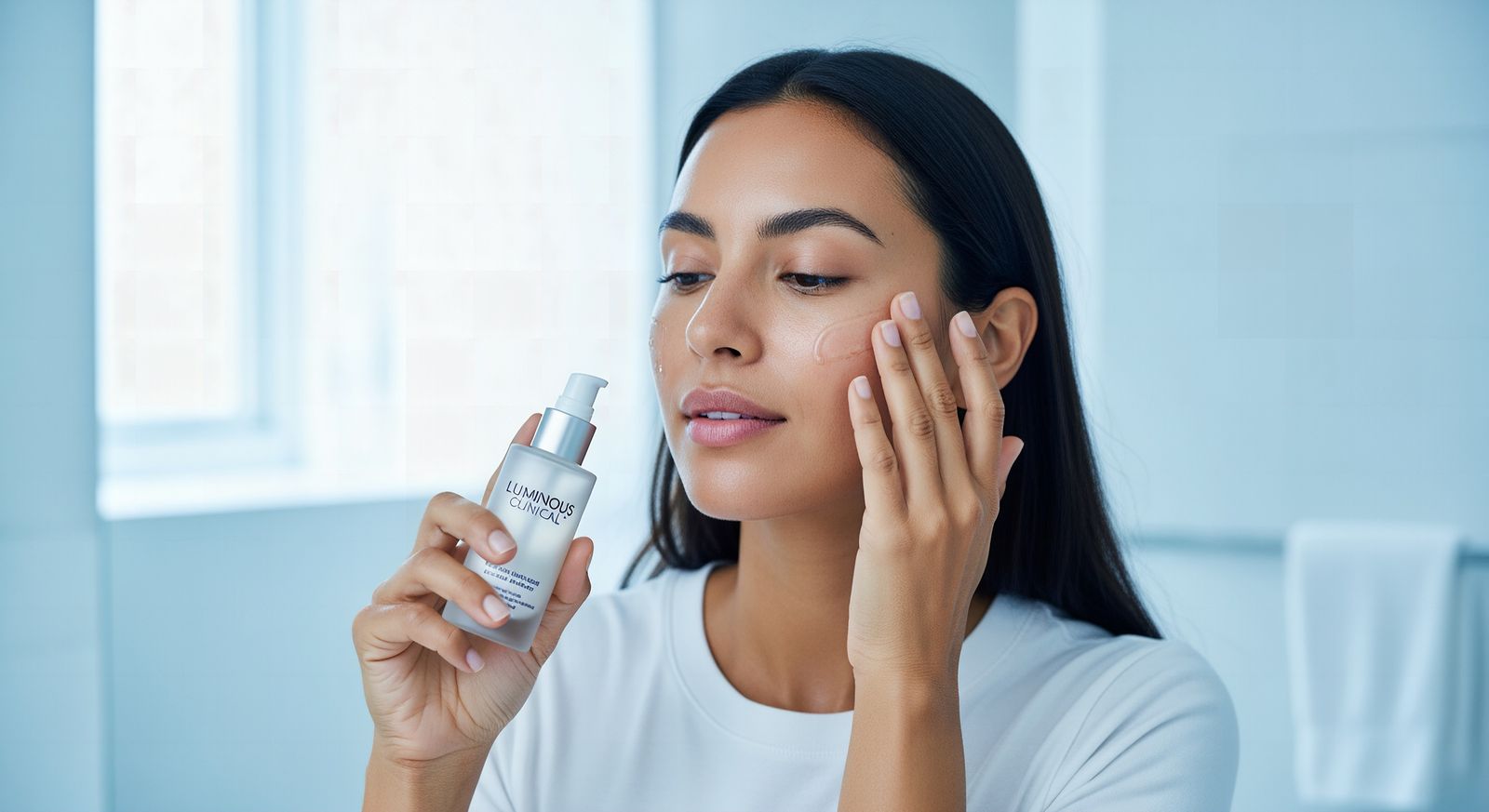
You keep seeing “copper peptides” on serum labels, in skincare reviews, and all over your feed. The bottles promise firmer, smoother, younger-looking skin. But what are copper peptides really, do they actually do anything, and how do you pick one that is worth the money?
If you have spent any time looking into anti-aging skincare, you have probably run into copper peptides and felt a little lost. One serum costs twelve dollars. Another costs a hundred and sixty. Both use the same buzzwords. Neither explains what the ingredient is or why the price is so different.
That is a completely fair place to be. Copper peptides have real research behind them, but the skincare aisle wraps that research in marketing until it is hard to tell the science from the sales pitch.
This guide walks through it in everyday words. What copper peptides are, what the research actually shows for skin, the difference between the serums you can buy and the other forms you may have heard about, and a simple checklist for choosing one. No hype, no pressure.
✓ Key takeaways
- Copper peptides are tiny fragments of protein bound to copper. Your skin already makes one of them, and the amount drops as you get older.
- The most studied one is called GHK-Cu. In cosmetic research it has been linked to firmer-looking, smoother-looking skin.
- What you buy over the counter is a topical cosmetic serum. It is not a drug and it is not the same as injectable or research forms.
- Price is mostly about the rest of the formula, not the copper itself. A good supporting cast matters more than a big number on the label.
- Results are gradual. Think two to three months of steady use, not overnight.
What Most People Want to Know First
- What is a copper peptide? A small piece of protein joined to a copper ion.
- Do they actually work? Cosmetic studies are encouraging for the look of firmness and fine lines, though they are small.
- Are they safe for my skin? Topical copper peptide serums are generally well tolerated, but patch-test anything new.
- Why is the price all over the place? The supporting ingredients and formulation drive the cost, not the copper.
- How long until I see anything? Most people give it a couple of months of daily use.
What Copper Peptides Actually Are
A peptide is just a short chain of amino acids, the same building blocks that make up the proteins in your body. A copper peptide is one of those short chains attached to a copper ion.
The one you see most often is written as GHK-Cu. The “GHK” is a three-amino-acid sequence (glycine, histidine, lysine) and the “Cu” is the copper. GHK is a tiny piece that breaks off your body’s own collagen (a protein in your skin) when collagen naturally breaks down — your body does not make it fresh on its own. Researchers have noted that the level in your body tends to fall as you age, which is part of why it became interesting to skincare scientists.
In skincare, the idea is simple. You apply a small amount of that copper peptide back onto the skin in a serum, hoping to support the look of healthy, firm skin.
“Copper peptides are not exotic. Your skin already knows this ingredient. The bottle is just putting a little back.”
What the Research Says, Made Simple
Copper peptides have been studied for decades, first in wound-healing science and later in cosmetics. The cosmetic research is the part that matters for a serum on your shelf.
In small facial-skin studies, copper peptide creams and serums have been linked to improvements in the appearance of firmness, the look of fine lines, and overall skin smoothness. Reviewers have connected copper peptides to the skin’s natural collagen and elastin support, which are the fibers that keep skin looking springy.
Two honest caveats. First, most of these studies are small, so the results are promising rather than settled. Second, these are cosmetic findings about how skin looks and feels, not medical claims. A serum is not going to treat a skin condition, and it should not claim to.
The honest version: the research is encouraging for how skin looks, the studies are small, and copper peptides are one helpful ingredient among several, not a miracle. Steady, realistic expectations win here.
Serum vs the Other Forms You Might Have Heard About
This is where people get confused, so let us keep it clear.
A copper peptide serum or cream is a topical cosmetic. You smooth it onto clean skin. It is what you find in stores and online, and it is what this guide is about.
You may also see copper peptides discussed in injectable or research forms. Those are a different subject entirely, they are not cosmetics, and they are not something you should be sourcing from a skincare shelf. For everyday anti-aging skincare, a well-made topical serum is the version that makes sense.
How to Choose a Copper Peptide Serum
Here is the simple checklist. A serum that gets these right is worth your money, whatever the price.
Notice what is not on this list: the price. A twelve-dollar serum with a smart formula can be a great buy, and a premium serum can be worth it if the rest of the ingredients earn the cost. The number on the box tells you very little on its own.
See the Copper Peptide Serums We Compared, Ranked →
Our team compared the top-rated options against thousands of verified reviews and lined them up side by side, so you can skip the guesswork.
How to Use It Without Wasting Money
A few small habits get you the most out of any copper peptide serum.
Apply to clean skin
A few drops after cleansing, before your moisturizer. A little goes a long way.
Be consistent
Daily use over weeks is what shows results. Skipping around gets you very little.
Give it time
Two to three months is a fair window before you judge whether it is working for you.
Do not overload
Some people prefer not to layer copper peptides with strong direct vitamin C in the same routine. If your skin is happy, keep it simple.
“The best copper peptide serum is the one you will actually use every day. Consistency beats a fancy label every time.”
Common Questions
Are copper peptides the same as retinol?
No. They are different ingredients that people use for similar goals. Retinol is a vitamin A derivative that can be strong for some skin. Copper peptides are usually described as gentler. Many people use one, the other, or both at different times of day.
Can I use a copper peptide serum with hyaluronic acid?
Yes. Hyaluronic acid is a common and friendly pairing. Many copper peptide serums already include it to help the skin hold moisture.
Do more expensive serums work better?
Not automatically. Price often reflects the full formula, the brand, and the packaging. A well-formulated budget serum can perform beautifully, and a premium serum can be worth it when the supporting ingredients justify the cost.
How long before I see a difference?
Most people look for changes in the appearance of their skin after about eight to twelve weeks of daily use. Skincare is patient work.
Is it safe for sensitive skin?
Topical copper peptide serums are generally well tolerated, but everyone is different. Patch-test a new product on a small area first, and stop if you notice irritation.
Where should I start?
A well-reviewed serum with a clean, honest formula is the easiest first step. Our copper peptide comparison lines up the top-rated options so you can pick one without reading a hundred labels.
Want to go deeper?
- Read the GHK-Cu research guide for the deeper science behind copper peptides.
- See the best copper peptide serums, compared and ranked for a shortlist worth buying.
- Curious about other anti-aging options? Browse our full guide library.
Sources
An honest note about the research: A lot of the copper-peptide research comes from the same scientist who first discovered it, holds the patents, and started companies that sell it. There are not yet large, independent studies. So treat the results as promising and early — not settled.
- Pickart L & Margolina A. Regenerative and protective actions of the GHK-Cu peptide. Int J Mol Sci, 2018. review
- Pickart L, et al. GHK peptide and gene expression relevant to health. PMC, 2015. paper
- Pickart L, Margolina A. Regenerative and Protective Actions of the GHK-Cu Peptide in the Light of the New Gene Data. International Journal of Molecular Sciences, 2018.
- Pickart L. The Human Tri-Peptide GHK and Tissue Remodeling. Journal of Biomaterials Science, Polymer Edition, 2008.
- Badenhorst T, et al. Pharmaceutical Strategies for the Topical Dermal Delivery of Peptides. Skin Pharmacology and Physiology review literature.
- U.S. Food & Drug Administration. Cosmetics labeling and claims guidance (cosmetic vs drug distinction).
Copper peptide serums discussed here are cosmetic products. Statements describe the appearance of skin and have not been evaluated to diagnose, treat, cure, or prevent any condition. Individual results vary.
Last updated: 2026-07-20 · Editorially reviewed by the Peptides.io team



Comments