
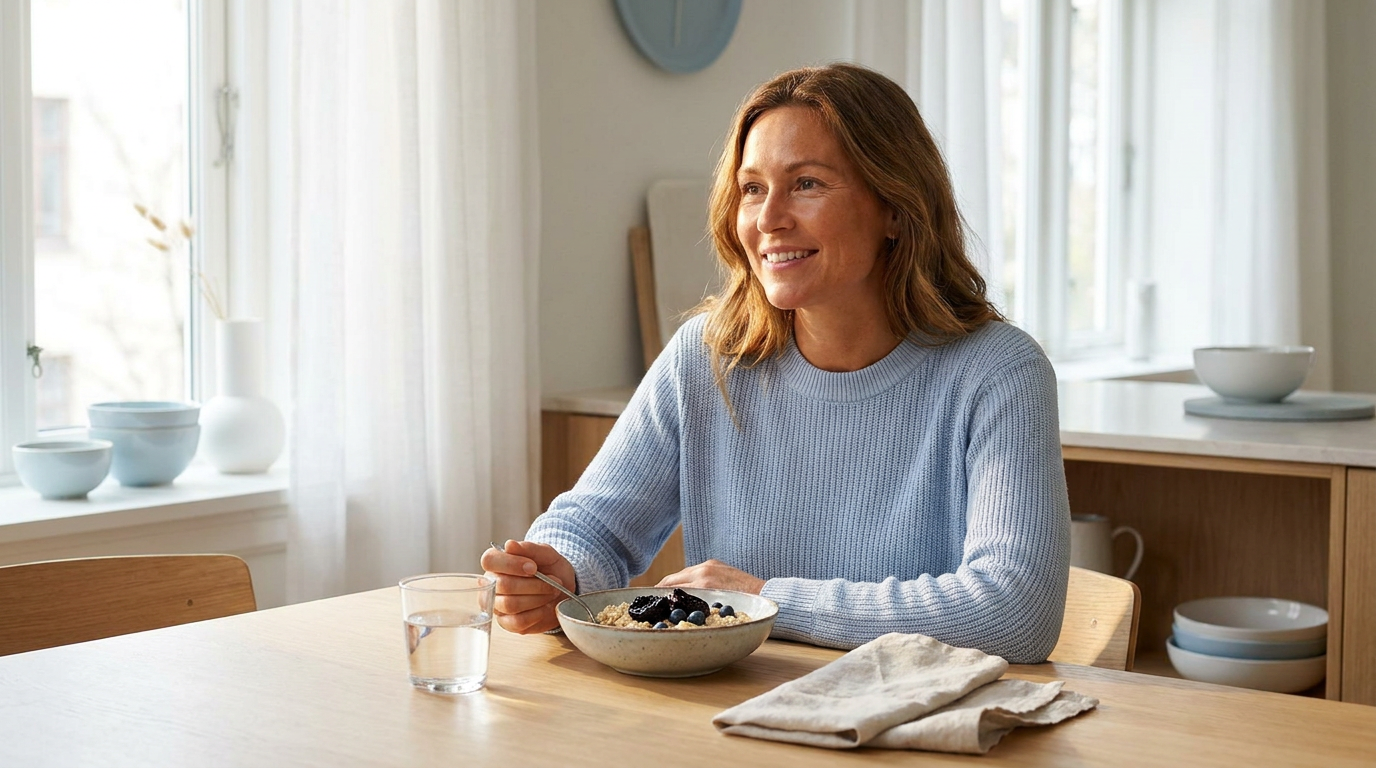
Constipation is a common side effect of GLP-1 medicines like Zepbound® and Wegovy®. If you feel backed up, you are not alone.
Maybe your body used to run like clockwork. Now days go by and nothing moves. That change can feel worrying and a little frustrating.
The good news is that this is common and often manageable. Small steps with food, fluids, and movement may help you feel more regular.
Key takeaways
- Constipation is a common labeled side effect of GLP-1 medicines like Zepbound® and Wegovy®.
- Wegovy® listed constipation in about 24% of users, more than Zepbound®, Ozempic®, or Mounjaro®.
- GLP-1 medicines slow digestion, so stool can move more slowly and feel harder to pass.
- Fiber, fluids, and daily movement are gentle first steps that may help you stay regular.
- Call your prescriber for severe belly pain, or no bowel movement with vomiting.
What this guide answers
- Why do GLP-1 medicines like Zepbound® and Wegovy® cause constipation?
- How common is constipation with each brand?
- What food, fluid, and movement steps may help?
- How long does GLP-1 constipation usually last?
- When is constipation a sign to call your prescriber?
Why GLP-1 medicines like Zepbound® and Wegovy® cause constipation
GLP-1 medicines like Zepbound® and Wegovy® slow how fast food leaves your stomach. This is a labeled effect. It is part of how they help you feel full longer.
When digestion slows, stool can move through your gut more slowly too. Slower movement lets your body pull out more water. That can leave stool harder and tougher to pass.
Eating less can play a part as well. Smaller meals often mean less fiber and less fluid. Both of those help keep things moving.
So constipation here is not a sign that something is broken. It is often the same slowdown that curbs your appetite, felt lower down.
This effect can be stronger at higher doses. It can also feel new again each time your dose goes up. That pattern is common and expected.
The same effect that curbs your hunger can also slow your stool. A calmer, slower gut is doing part of the job.
GLP-1 constipation by brand: Zepbound®, Wegovy®, Ozempic® and Mounjaro®
Constipation shows up on the label for all four medicines. The rates are not the same across brands. Here is what the FDA prescribing information reported.
| Brand (active drug) | Dose studied | Constipation reported | Placebo |
|---|---|---|---|
| Wegovy® (brand of semaglutide) | 2.4 mg weekly | About 24% | About 11% |
| Zepbound® (brand of tirzepatide) | 5, 10, 15 mg weekly | About 17%, 14%, 11% | Not listed here |
| Ozempic® (brand of semaglutide) | 0.5 mg, 1 mg weekly | About 5%, 3.1% | About 1.5% |
| Mounjaro® (brand of tirzepatide) | 15 mg weekly | About 7% | About 1% |
Constipation rates from FDA prescribing information, section 6.1.
Wegovy® listed the highest rate of the four. About 24% of people on Wegovy® 2.4 mg reported constipation, versus about 11% on placebo.
Zepbound® rates ran lower, from about 11% to 17% across its doses. Ozempic® and Mounjaro® reported the lowest rates in this group.
Higher rates on one brand do not mean it is a worse choice for you. It only means constipation was reported more often in those studies.
Food and fluid steps that may help GLP-1 constipation
These gentle steps may help while your body adjusts to Zepbound®, Wegovy®, or another GLP-1 medicine. Add them slowly, one at a time. Give each a few days.
1. Sip water through the day. Fluids help soften stool so it passes more easily.
2. Add fiber slowly from foods like oats, beans, berries, and vegetables.
3. Move your body most days. A short walk after meals can wake up your gut.
4. Keep a simple routine. Try the bathroom at the same calm time each day.
5. Do not push through severe pain. Ease off and check in with your prescriber.
Go slow with fiber if meals already feel small. Too much too fast can add bloating. Pair any extra fiber with more water.
These are supportive habits, not a cure. They give your slower gut a bit of help. Many people find a mix works better than any single step.
Timing can matter too. Some people find a warm drink in the morning helps get things going. A calm, unhurried few minutes may also help your body relax.
Be patient with your gut and go slow. Most side effects settle as your body gets used to the medicine.
What can make GLP-1 constipation worse
A few everyday things can make constipation harder to shake. Knowing them helps you plan ahead. None of these mean you did anything wrong.
Smaller meals on Zepbound® or Wegovy® often mean less fiber. Less fiber gives stool less bulk. That can slow your routine even more.
Low fluid intake is another common one. When food feels less appealing, drinks can slip too. Your gut needs water to keep stool soft.
Sitting still for long stretches can add to it. Gentle daily movement helps your gut stay active. Even a short walk after a meal counts.
A dose step up can stir things up again. That is expected while your body adjusts to a higher amount. It usually calms down within a week or two.
How long GLP-1 constipation may last
For many people, constipation is worst in the first few weeks. It often eases as your body gets used to the medicine. That is a hopeful sign.
Each time your dose steps up, it can return for a short while. This is common during titration. It usually settles again with steady habits.
There is no single timeline that fits everyone. Some people feel better within days. Others need a few weeks and a bit of patience.
Keeping your habits steady matters more than any quick fix. Fiber, fluids, and movement work best over time. Small daily wins tend to add up.
When GLP-1 constipation is a reason to call your prescriber
Most constipation is mild and gets better with simple steps. A few signs, though, mean you should reach out. Trust yourself if something feels off.
Severe or lasting belly pain, with or without vomiting.
No bowel movement for several days along with vomiting.
A hard, swollen belly that will not settle down.
You cannot keep fluids down, or you feel very dehydrated.
Any symptom that worries you or keeps getting worse.
These can be signs of a blockage or dehydration that needs care. Do not wait it out at home. Call your prescriber or seek care right away.
Ongoing vomiting or diarrhea can dry you out fast. Your prescriber may want to check on you if it does not pass.
Frequently asked questions
Why do GLP-1 medicines cause constipation?
GLP-1 medicines like Zepbound® and Wegovy® slow how fast food leaves your stomach. That labeled effect helps you feel full, but it also slows your whole gut. As stool moves more slowly, your body pulls out extra water, so it can turn harder and tougher to pass. Eating less fiber and fluid can add to it.
Which GLP-1 medicine causes the most constipation?
In FDA prescribing information, Wegovy® 2.4 mg listed the highest rate, at about 24% versus about 11% on placebo. Zepbound® ran lower, from about 11% to 17% across its doses. Ozempic® and Mounjaro® reported the lowest rates in this group. A higher rate does not mean a brand is a worse fit for you.
Does constipation from Zepbound® or Wegovy® go away?
For many people it eases over time. Constipation is often worst in the first few weeks, then settles as your body adjusts to the medicine. Each dose step up can bring it back for a short while, which is common during titration. There is no set timeline, so give steady food and fluid habits time to work.
What can I eat to help GLP-1 constipation?
Fiber from whole foods can help, like oats, beans, berries, and vegetables. Add it slowly so you do not trade constipation for bloating. Pair extra fiber with more water, since fiber works best when stool stays soft. Because meals are often smaller on a GLP-1 medicine, a little planning helps you fit these foods in.
Should I use a laxative for GLP-1 constipation?
That is a question for your prescriber, not a self-serve choice. Food, fluid, and movement are gentle first steps that may help many people. If those are not enough, your care team can look at your full health picture and guide what is safe for you. Avoid starting anything new for your gut without checking in first.
When should I call my prescriber about constipation?
Reach out for severe or lasting belly pain, with or without vomiting. Call if you have no bowel movement for several days along with vomiting, or a hard, swollen belly. Seek care right away if you cannot keep fluids down or feel very dehydrated. Trust yourself if a symptom worries you or keeps getting worse.
Can drinking more water really help?
It often helps, yes. GLP-1 medicines slow your gut, and slower movement lets your body pull more water out of stool. Sipping fluids through the day helps stool stay softer and easier to pass. Water also supports the extra fiber you may be adding, so the two steps work best as a pair.
Keep reading
GLP-1 side effects: what to expect and when. See the bigger picture beyond constipation, and how the first weeks often feel.
Read more →Important: This page is for education only and is not medical advice. Any medicines named here are available by prescription. Always talk to a licensed clinician about medicines, symptoms, or anything you are considering.
Related data
- When generic semaglutide arrives →FDA patent and exclusivity expiry dates
- Semaglutide clinical trials →Registered studies, phases and status
- When generic tirzepatide arrives →FDA patent and exclusivity expiry dates
- Tirzepatide clinical trials →Registered studies, phases and status
- FDA drug shortage tracker →Which peptide drugs are in shortage now, with the FDA-stated cause
- Which peptides are FDA-approved →Approval status for every peptide, from Drugs@FDA
More from Peptides.io
- GLP-1 Treatment Gap Index →Our analysis of where Medicaid access to GLP-1s falls shortest, by state
- Original research from Peptides.io →Data reports we produce ourselves

Comments