
7 THINGS TO KNOW ABOUT
SEMAGLUTIDE
The friendly visual guide to the best-known GLP-1


Betty: Hi! I’m Betty. Here’s the origin story. Right after you eat, your gut makes a little hormone called GLP-1. Think of it as a tiny messenger. It runs up to your brain and says “we’re full down here, you can stop eating.” The catch? Your own copy fades in a few minutes. So scientists made a copy and changed it a little. Now it keeps sending for about a week. That week-long copy is semaglutide. It’s the medicine inside Wegovy and Ozempic.

Ace: Big number alert! Here’s why it works. That copied messenger, GLP-1, does three quiet jobs at once. First, it turns hunger down in your brain. Second, it slows how fast your stomach empties. So one meal keeps you full longer. Third, it nudges insulin. Insulin is the hormone that clears sugar out of your blood. So your blood sugar holds steadier. Run all three, all week, and you get the STEP-1 result: about 15% of body weight gone.1 And these aren’t new. The first GLP-1 medicine was approved back in 2005.4 Today’s approved brand is even cleared to help protect the heart.2

Betty: You made it! Here’s the honest, hopeful bottom line. This one is FDA-approved and it really works. Two things to carry out the door. First, the most common side effects are gut stuff. That means some nausea (feeling queasy), mostly early on. So start it with a real doctor who can guide your dose. Don’t do it on your own. Second, these results come from the approved brands. Pharmacy-mixed ‘compounded’ copies are not FDA-approved.3 And while the weight comes off, protect your muscle. Lift a little, and eat your protein every day.
What Semaglutide Is
First things first. What is this messenger in a syringe? It’s a once-a-week, FDA-approved shot.5 The FDA is the US agency that approves medicines. This shot turns your appetite down. It also keeps your blood sugar steady.
One shot a week — taken at home, under the skin
Helps with weight loss and type-2 diabetes (high blood sugar)

Sold as Wegovy® & Ozempic®
The best-known GLP-1 — the gut-hormone copy that made these medicines famous
How It Works: One Signal
Okay. So what does that copied messenger do inside you? It turns your body’s ‘I’m full’ signal back up.
It copies GLP-1 — the gut hormone your body already makes after every meal
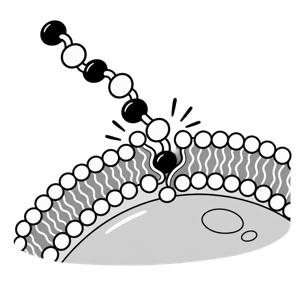
You feel full sooner, so the constant ‘food noise’ in your head finally goes quiet
How Well It Works
So does keeping that signal on really move the scale? Here are the numbers. They come from the big STEP-1 study1 of the approved brand on the full 2.4 mg dose.
Double-digit average weight loss — a real step forward without surgery
~15%
of body weight lost on average
Semaglutide vs Sugar Pill
Here’s semaglutide next to a sugar pill. A sugar pill is a dummy with no medicine in it. These are the average body-weight loss numbers at 68 weeks in STEP-1 (the approved brand).
Why People Choose It
What the First Year Looks Like
Mo 1
Settling inA small starting dose. Your appetite drops. A little nausea (feeling sick to your stomach) is normal.
2–3
Picking up speedThe dose goes up. You lose a steady 1–2 lbs a week. Your energy climbs.
4–6
Real changeBig, visible changes. Clothes get loose. Your health numbers get better.
6–12
Reach your goalClosing in on target — then build habits to keep it off for good.
Keep Your Muscle
One last thing before you go. Losing weight fast can quietly cost you muscle. Two simple habits protect it.
Lift weights 2–4 times a week

Eat protein every day to give your body what it builds with
Common questions about Semaglutide
Short answers to what people search for most. The sections above have the full picture.
Is semaglutide the same thing as Ozempic and Wegovy?
Yes. Semaglutide is the molecule; Ozempic®, Wegovy® and Rybelsus® are the brands. Ozempic is approved for type 2 diabetes, Wegovy for chronic weight management (and for lowering the risk of heart attack and stroke in adults with obesity and heart disease), and Rybelsus is the daily tablet for type 2 diabetes. Wegovy vs Ozempic, side by side →
Is semaglutide a peptide?
It is. Semaglutide is a modified copy of GLP-1, a 31-amino-acid gut hormone your body already makes after meals. The changes let it keep working for about a week instead of a few minutes, which is why it's a once-weekly injection. What GLP-1 actually is →
How much weight do people lose on semaglutide?
In the STEP 1 trial, adults on the 2.4 mg weekly dose lost about 15% of their body weight over 68 weeks, versus about 2.4% on placebo — both groups paired with diet and activity coaching. Results vary widely person to person, and weight tends to return if the medication is stopped. What happens when you stop →
What are the most common side effects?
Nausea, vomiting, diarrhea, constipation and stomach pain — mostly in the first weeks and around dose increases. The label carries a boxed warning about thyroid C-cell tumors seen in rodent studies; it isn't prescribed to people with a personal or family history of medullary thyroid cancer or MEN 2. Side effects, week by week →
Is compounded semaglutide FDA-approved?
No. Only the branded products are FDA-approved and were tested in the trials above. Compounded versions are mixed by pharmacies and are not reviewed by the FDA for safety, effectiveness or quality. Compounded GLP-1s, explained →
How much does semaglutide cost, and how do you get it?
It's prescription-only, so the path is a licensed clinician — in person or through telehealth — and the price depends heavily on insurance and which brand you're prescribed. We keep the current numbers and coverage rules in one place. Current Wegovy and Ozempic costs → · How online prescribing works →
Sources
Every number on this page traces back to one of these — FDA labels and announcements, peer-reviewed trials, and clinical references.
- STEP 1 trial: semaglutide 2.4 mg, 14.9% vs 2.4% weight loss at 68 weeks (PubMed)
- FDA (2024): Wegovy approved to cut risk of heart attack and stroke
- FDA: concerns with unapproved compounded GLP-1 drugs
- NCBI StatPearls: exenatide was the first FDA-approved GLP-1 (2005)
- FDA (2026): Wegovy HD higher-dose semaglutide approval
Ready to compare your options?
See how the top GLP-1 providers stack up — pricing, what’s included, and who each one is best for.
Compare GLP-1 providers →Important: This guide is for education only and isn’t medical advice — always talk to a licensed physician before starting, stopping, or changing any medication. The study results here are for the FDA-approved branded medicines (Wegovy®, Ozempic®). Compounded (pharmacy-mixed) semaglutide is not FDA-approved and was not part of these studies. We may earn a commission from links to providers, which never influences our recommendations.
Different peptides, different jobs. Which one are you trying to learn about?
Not sure? Take the 60-second quiz →
Comments