
GLP-1 storage and travel questions come up fast once you fill your first pen. You want to keep it safe without turning your fridge into a science lab.
Maybe a trip is coming up and you are not sure how to pack a pen. Maybe you left one on the counter overnight and now you feel unsure.
That worry is normal, and it is easy to fix. Each FDA-approved brand prints clear storage rules on its label, and this guide walks through them in plain words.
Key takeaways
- All four GLP-1 brands are stored cold at 2 to 8°C, never frozen, and kept out of light.
- Wegovy® may sit at 8 to 30°C for up to 28 days before you remove the cap.
- Ozempic® keeps for 56 days at 15 to 30°C or in the fridge after its first use.
- Zepbound® and Mounjaro® can stay at up to 30°C for a total of 21 days.
- Pack pens in your carry-on, keep the carton, and replace any medicine that froze or overheated.
What this guide answers
- How should GLP-1 pens and vials be stored before the first use?
- How long can each brand stay out of the fridge?
- What is the safest way to travel with a GLP-1 pen?
- How do you keep medicine cold on a trip without freezing it?
- When should a GLP-1 product be replaced?
GLP-1 storage and travel rules by brand
Here is the short version. Every FDA-approved GLP-1 brand lives in the fridge, and each one allows a set time at room temperature.
The exact numbers are not the same for each brand. The table below lays them out side by side, so you can find your own pen fast.
| Brand (active ingredient) | Refrigerated storage | Room-temperature allowance | Never do this |
|---|---|---|---|
| Wegovy® (semaglutide) | 2 to 8°C until you use it | 8 to 30°C for up to 28 days, before the cap is removed | Do not freeze; keep in original carton, away from light |
| Ozempic® (semaglutide) | 2 to 8°C before first use | After first use, up to 56 days at 15 to 30°C or refrigerated, cap on | Do not freeze; protect from light |
| Zepbound® (tirzepatide) | 2 to 8°C until you use it | Up to 30°C for up to 21 days total | Do not freeze; keep in original carton, away from light |
| Mounjaro® (tirzepatide) | 2 to 8°C until you use it | Up to 30°C for up to 21 days total | Do not freeze; keep in original carton, away from light |
Storage rules differ by brand. Always follow the label inside your own medicine carton.
Notice that the room-temperature limits change from brand to brand. That is why it helps to read the label that came in your own carton.
These rules apply to the FDA-approved branded pens and vials above. They do not describe how any other preparation should be stored.
How to store your pen in the fridge
Before you open a pen, the fridge is home. All four brands are kept at 2 to 8°C until you are ready to start.
Keep each pen in its original carton. The carton blocks light, and GLP-1 medicines should be protected from light.
One rule matters most in the fridge. Never let a GLP-1 pen freeze, and do not use a pen that has frozen.
The fridge keeps a GLP-1 pen steady, but one freeze can make that pen unusable.
How long each brand can stay out of the fridge
Wegovy® gives you room before you start. An unused pen or syringe may sit at 8 to 30°C for up to 28 days, before you take the cap off.
Ozempic® is a bit different once it is in use. After the first dose, the pen keeps for 56 days, either at 15 to 30°C or in the fridge. Keep the pen cap on between doses.
Zepbound® and Mounjaro® share the same limit. Each single-dose pen or vial can stay unrefrigerated at up to 30°C, for a total of 21 days.
The room-temperature days add up to that total. So the time out of the fridge counts, even across a few short trips.
A simple storage routine, step by step
A short routine keeps things easy. These five steps work for Wegovy®, Ozempic®, Zepbound®, and Mounjaro®.
1. Pick up your medicine and put it in the fridge at 2 to 8°C right away.
2. Leave each pen inside its original carton so it stays out of the light.
3. Check that the pen never touches the freezer wall or a freezing pack.
4. When you travel, move the pen to an insulated bag with a cool pack.
5. Track the room-temperature days, and note the date you first used the pen.
How to travel with GLP-1 medicines
Travel does not have to be stressful. A little planning keeps your GLP-1 pen safe from the pharmacy to your destination.
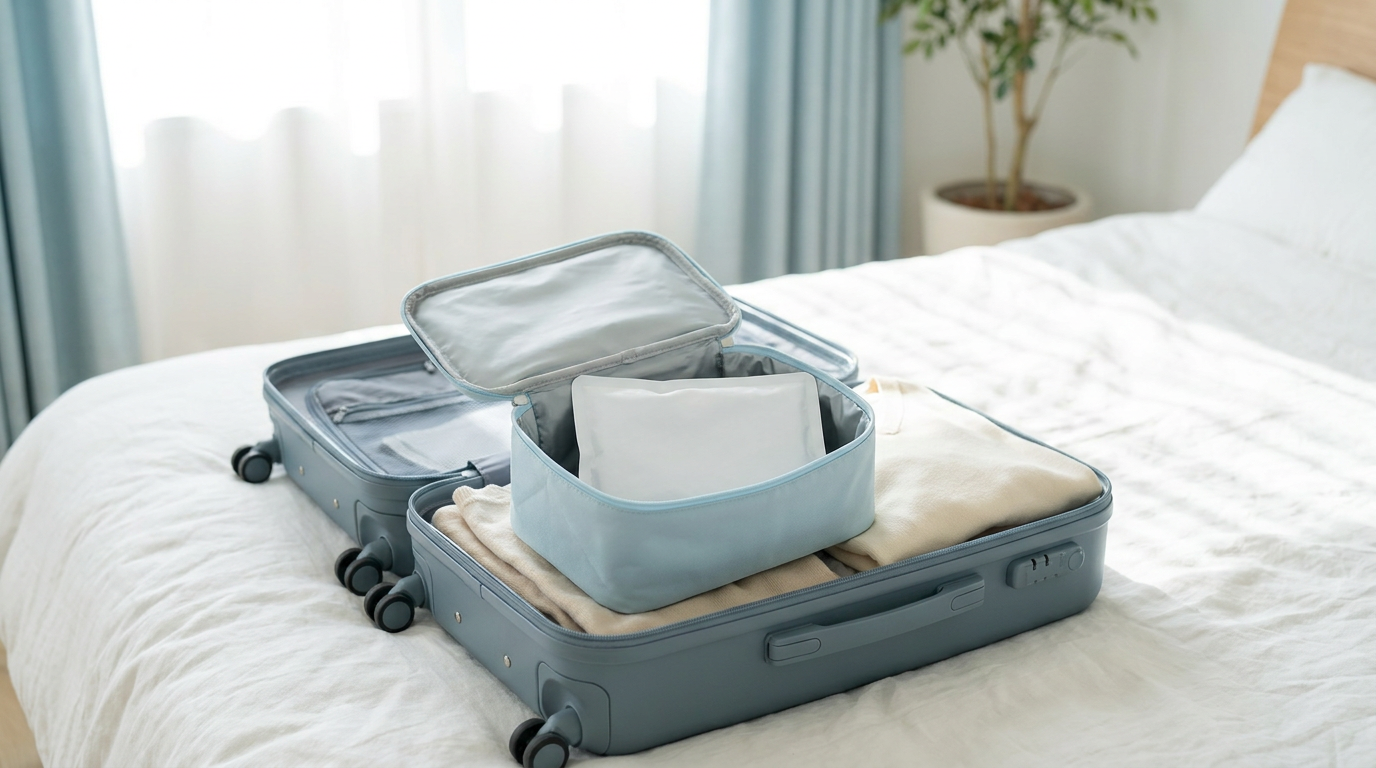
Pack pens in your carry-on bag, not your checked luggage. Checked bags can get very hot or very cold, and a frozen pen cannot be used.
Keep the medicine in its original carton while you travel. The carton protects it from light and holds the label you may need to show.
Your carry-on bag is the safest place for a GLP-1 pen, away from the heat and cold of the cargo hold.
Keeping it cold on the road
For longer trips, a small cooler or insulated bag helps. A cool pack keeps the pen near fridge temperature for hours.
Do not let the pen touch a frozen ice pack directly. A frozen pen cannot be used, so wrap the pack in a cloth to keep the pen from freezing.
Once you reach a fridge, put the pen back in at 2 to 8°C. A hotel mini fridge works well, as long as it does not freeze the pen.
When a GLP-1 product may need replacing
Sometimes a pen is no longer safe to use. A few clear signs tell you it is time to replace it.
Replace any GLP-1 pen that has frozen, even if it looks fine after thawing. A frozen pen should not be used.
Replace a pen that stayed out of the fridge past its brand limit. That means 28 days for Wegovy® before opening, 56 days for Ozempic® in use, and 21 days for Zepbound® or Mounjaro®.
Replace a pen that sat above 30°C, like in a hot car or in direct sun. When in doubt, ask your pharmacist before you use it.
If a GLP-1 pen has frozen or overheated, it is safer to replace it than to guess.
A quick word on injection sites
Storage and injection go hand in hand. Once your pen is at the right temperature, where you inject matters too.
All four brands are injected under the skin of the abdomen, thigh, or upper arm. Each brand is taken once weekly, and rotating sites can help.
The next guide covers those sites in detail, including how to rotate them.
Frequently asked questions
Can I keep my GLP-1 pen at room temperature?
Yes, within limits set by each brand. Wegovy® may sit at 8 to 30°C for up to 28 days before you remove the cap. Ozempic® keeps for 56 days at 15 to 30°C after first use. Zepbound® and Mounjaro® allow up to 30°C for a total of 21 days. After that, replace the pen.
What happens if my GLP-1 pen freezes?
Do not use a pen that has frozen. All four brands, Wegovy®, Ozempic®, Zepbound®, and Mounjaro®, must never be frozen. Even if the pen looks normal after it thaws, it should be replaced. Keep pens away from the freezer wall and from direct contact with ice packs, both at home and while you travel.
How do I travel with a GLP-1 medicine on a plane?
Pack your pen in your carry-on bag, never in checked luggage. Cargo holds can get very hot or very cold, and a frozen pen cannot be used. Keep the medicine in its original carton, so it stays out of the light and the label stays with it. A small insulated bag with a cool pack helps on long trips.
Do I need to refrigerate my GLP-1 pen while traveling?
Before first use, all four brands live in the fridge at 2 to 8°C. For short trips, each brand allows time at room temperature, up to 30°C. Wegovy® allows 28 days, Ozempic® 56 days after first use, and Zepbound® or Mounjaro® 21 days. Use a cooler for long trips, and return the pen to a fridge when you can.
Can I put my GLP-1 pen in a hotel mini fridge?
Yes, as long as it does not freeze the pen. A mini fridge should hold your GLP-1 medicine at 2 to 8°C, the same as at home. Check that the pen is not pressed against the back wall, where it can freeze. If the fridge feels too cold, use an insulated bag with a cool pack instead.
How do I keep my GLP-1 pen cold without freezing it?
Use a cool pack, not a frozen block pressed against the pen. Wrap the pack in a cloth, so the pen stays cold but never freezes. Aim to keep the medicine near fridge temperature, which is 2 to 8°C. Check the pen now and then, and move it to a real fridge as soon as you reach one.
When should I replace my GLP-1 medicine?
Replace a pen that has frozen, one that sat above 30°C, or one that passed its brand time limit. Those limits are 28 days for Wegovy® before opening, 56 days for Ozempic® in use, and 21 days for Zepbound® or Mounjaro®. When you are unsure, ask your pharmacist before you use the pen.
Keep reading
GLP-1 injection sites: where and how to inject
See the best spots to inject, how to rotate them, and simple tips for once-weekly dosing.
Read more →Important: This page is for education only and is not medical advice. Any medicines named here are available by prescription. Always talk to a licensed clinician about medicines, symptoms, or anything you are considering.
Related data
- FDA drug shortage tracker →Which peptide drugs are in shortage now, with the FDA-stated cause
- Which peptides are FDA-approved →Approval status for every peptide, from Drugs@FDA
- Which peptides have clinical evidence →Registered clinical trial counts from ClinicalTrials.gov
More from Peptides.io
- GLP-1 Treatment Gap Index →Our analysis of where Medicaid access to GLP-1s falls shortest, by state
- Original research from Peptides.io →Data reports we produce ourselves



Comments